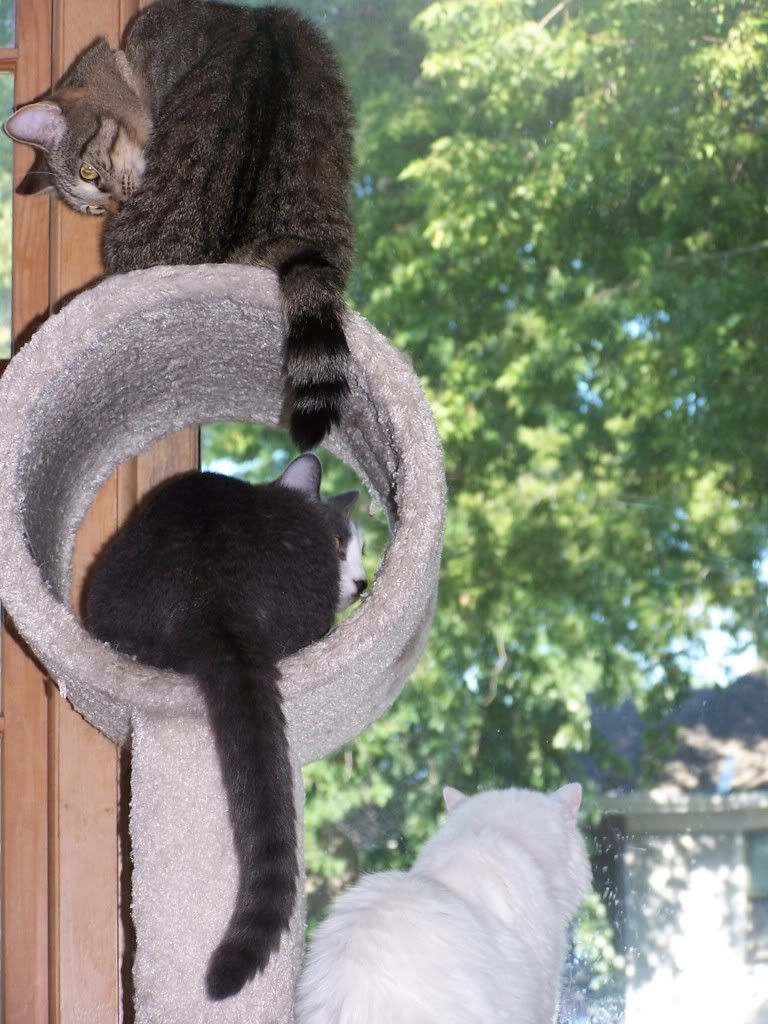
 |
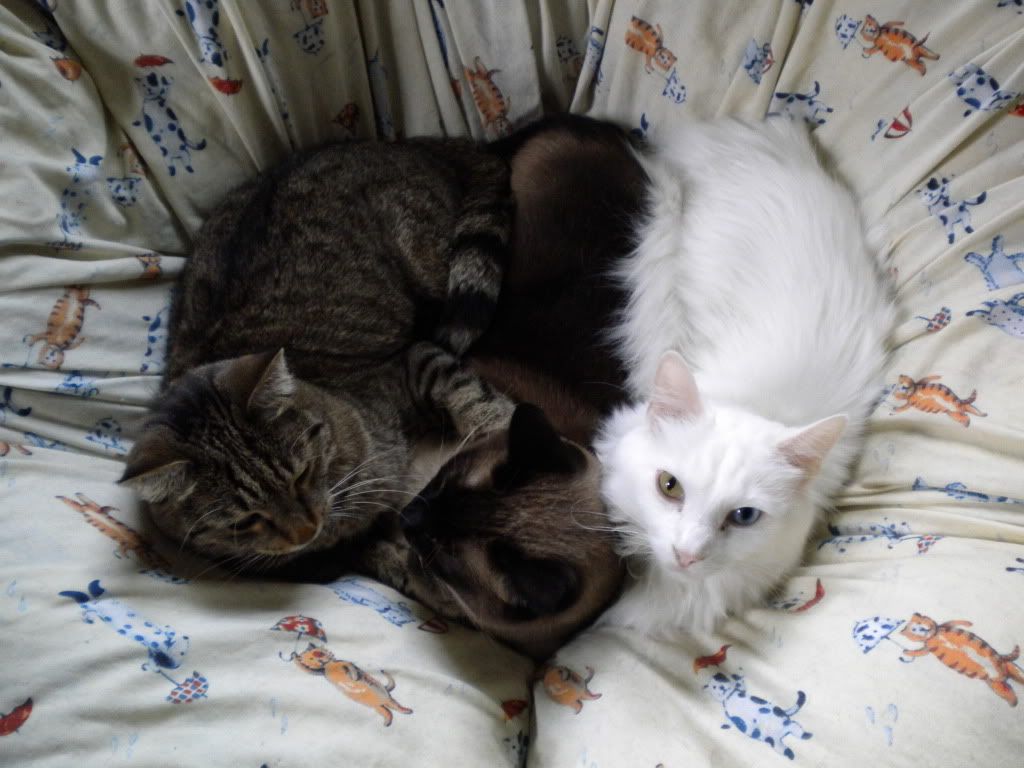
| Then someday you'll get to spend your days taking pictures of adorable cuddle puddles. |
PREPARING YOUR HOME
(Best case scenario, you do all this before you get another cat, but these are improvements that can help any cat household no matter how long the cats have been living/fighting together.)
The first thing you need to do is assess your home. If your house isn't multi-cat friendly then you are setting yourself up for failure. To have a smooth introduction and a peaceful life, you first need to check out your litter box situation. The golden rule for litter boxes is: number of cats + 1 and litter boxes should be cleaned daily. Having too few or dirty litter boxes pretty much guarantees cat fights, litter box aversion, or both.
Litter boxes good? Next, your resident cat(s) need a place to mark their territory and your new cat needs some territory to claim as his – for this you need scratching posts and cat trees. (Read about why scratching is important here.) Give your new cat a fresh scratching item, even if it's just one of the lay-on-the-floor cardboard scratchers. Having something of their own to scratch that doesn't smell like the other cats in the home will help you out later on during the actual introduction.
The third thing you should evaluate before bring another cat into your home is vertical space. Like scratching, it's a territory thing. Not having enough vertical space will increase competition in your home and certainly not help your cats get along.
EVALUATE YOUR CURRENT CATS
Are your current cats happy and healthy? Before you bring a new cat home you need to make sure your resident cats are current on their vaccinations and spayed or neutered. Not only do you not want any accidents, but altered cats get along much, much better than they would otherwise. An unaltered male cat would happily kill a new tiny kitten if they were left unattended together in your home.
If you currently have ill or unaltered cats, right now might not be the best time for you to make an addition to your family.
 |
| It's hard to believe now that at one time Harry wanted to eat Damien as a snack. |
PREPARING "THE SANCTUARY"
As soon as you walk into your house with a new cat, your current cat(s) are going to know. Even still, your goal is to be as unobtrusive about the new member of your family as possible. Before you bring your new cat home, set up a room just for them.
In this room you need:
- fresh water
- food, as needed (dependant on how you're feeding – free or scheduled)
- a clean litter box
- something to scratch on
- something to play with
- something to sleep on
- somewhere to hide
If you already have a new cat and you're having problems, repeat this step (or do it for the first time). It's the first step to making things better and it keeps your cats safe from each other. Not only are cat fights awful to listen to, but they can cause an array of damage – anything from small bites and scabs, to scratched eyes, to puncture wounds that form abscesses.
 |
| Lola, circa 2004, after getting beat up by another cat while I was in the shower. She received a puncture wound which turned into an abscess that had to be drained with a tube. Nothing about this experience was enjoyable. |
NOW WHAT?
You have a new cat! Yay! Keep your new guy in his own private room, and keep your resident cats firmly on the other side of the door. Do not be tempted to do anything more right now. You might think your current cats will be excited for the new addition, and maybe they will be, but rushing the introduction process will only make it take longer to obtain your goal – a peaceful home with cats that like each other.
In Part 2, I will go through the next steps to introducing cats to each other. Until then, just remember that you can't go too slow with this process. Be patient and make sure you show love to all your cats, not just your newbie!