Showing posts with label Boo Radley. Show all posts

Thursday, June 28, 2012

Don't Trust Me With Scissors

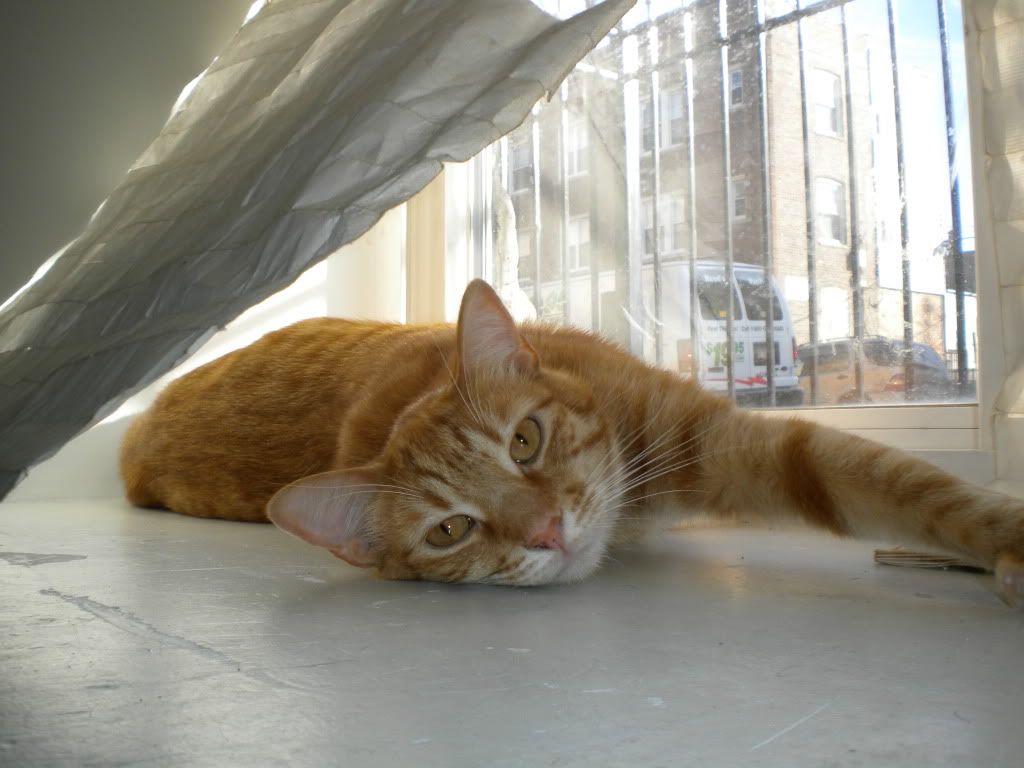
Boo Radley, for those of you who don't know him, is not a normal cat. I'm pretty sure he is intellectually disabled (which, of course, does not make me love him any less) and he doesn't act much like a cat at all. He spent his kittenhood half in/half out of Scout's mouth, constantly covered in dog slobber and looking for any crumbs of food that might have fallen to the ground. He doesn't groom himself regularly and often smells vaguely like the litter box. Boo's most un-cat-like attribute is that you can do absolutely anything to him and get no reaction, except for maybe a loud purr.


So when he jumped up on the kitchen counter to finish D's leftovers, right next to me and a pair of scissors that someone had neglected to put away, the first thing I saw was opportunity. There was my fat cat with dreads around the base of his tail completely distracted by food - time for an impromptu hair cut.

There I was just chop, chop, chopping away, and most of the little mats were gone, but then I got ambitious. Boo may have short hair, but it's super thick and since he was ignoring me completely (very focused on finishing every last speck of food), I decided it was a great idea to just cut off as much fur as possible. All of it even, if he'd sit there long enough. It's certainly hot enough now for him to run around without any fur on.

Even as I made that decision, it happened. Overconfident and under cautious, whipping those scissors around like I thought I was Edward Scissorhands beautifying all the neighborhood pets or something, I got too close and I cut him. Yep, I cut him, with scissors, and.... nothing. No reaction at all. No noise. Didn't even stop eating.

I knew, logically, that he must be fine. If he wasn't fine, he would have reacted in some way. I mean, dang, you step on a cat's tail and they make a noise like their world is shattering around them and Boo hadn't even flinched. I, on the other hand, was trying to swallow a big ol' ball of panic and make myself asses the damage I had caused. I've never accidentally (or on purpose for that matter) cut a cat before. 

After looking at it, and seeing that it really wasn't that bad (not large, not bleeding, just a little pink looking), I ran for my bottle of Magic Spray (also known as Vetericyn Wound Spray*) and gave him a spritz. Then I ran off to my husband and had a little panic attack about it. (Husband: "But he's alright? It's not even bleeding? Calm down then, he's fine." Me: "But no! You don't understand! I CUT OUR CAT WITH SCISSORS!)

Needless to say, I gave up on the haircut that day, and now Boo has an asymmetrical, rather large, and unfortunate looking mess of a bald spot going on. Good thing he's not one of those vain cats.

A few days later, I was off hanging out at the Polo Villa with Tucker and Nicole. Tucker has a couple of beautiful boys of his own so it's not unusual for us to slip into cat talk (started this time by me having another round of freaking out because I'd cut Boo with scissors.) The talk eventually rolled around to the FURminator, which I mistakenly thought was something like this (and, although I've never used one, I think is pretty ridiculous looking and probably ineffective).  What the FURminator actually is, however, is amazing**.

http://emansole.info/furminator-cat-deshedding-tool-large-short-hair.htm


Tucker gave me a little demonstration on Dimitri and then let me borrow it. I was eager to try it out on Mona, whose long, fine, and sticky hair is notorious for mats, but when I got home with the brush and ran it through her fur I was unimpressed. It had seemed to work so well on Dimitri's short fur, but on Mona's it was no better than a regular brush. Then I tried it on Boo.

That brush removed so much hair, it was like we had a small orange mountain next to us. Not only that, but the couple little dreads I had missed on disastrous scissor-cutting-day came right out without hardly a pull. Since I like to learn things, I got on the internet and read about the different kind of brushes FURminator has to offer for different coat types and decided I need to get my fingers on the long haired version to try out on Mona and Damien. For Bob, my little old man with mouth ulcers who has problems grooming himself, this brush is the best thing ever, he looks much more handsome after just a couple run-throughs.

And just in case you're worried, Boo is fine, and in the forever long amount of time it took me to write this post his cut has healed up. And the FURminator? Both the long and short hair versions are going at the top of my Christmas list.

*Get some for your pet first aid kit, it's incredible! There is an "over-the-counter" version and a stronger version you can ask your vet for. http://vetericyn.com/
** The folks at FURminator gave me nothing for the praise of their product, although it'd be great if they wanted to! (Same thing for Vetericyn!)

Thursday, April 5, 2012

You Brought Home Another One? (Part 2)

After reading Part 1, your home should be prepped to house multiple cats and your new cat should be isolated from your resident cats. If possible, get a clean bill of health from your vet before you bring your new cat into your home. If that isn't possible (you found a stray, the cat is already in your house, or whatever other reason) then make sure it happens before you start the actual introductions. The last thing you want to do is spread disease or parasites all around your home!

I know I've said this about a billion times now, but take this process slow. Yes, I know you're excited, and yes, I know it can be inconvenient to have a cat locked away in your bedroom or bathroom or laundry room or wherever, but every negative interaction between your cats is just going to make the introduction process take longer and make it more frustrating for you.

Negative interactions between your two (or three, or four...) cats isn't the only thing that can slow down the process, negative interactions from you can slow it down too. Do not punish your cat for being upset, angry, or aggressive and do not force your cats to do anything they don't want to do, these things will do nothing but hurt your cause and slow you down on your path to a happy home.


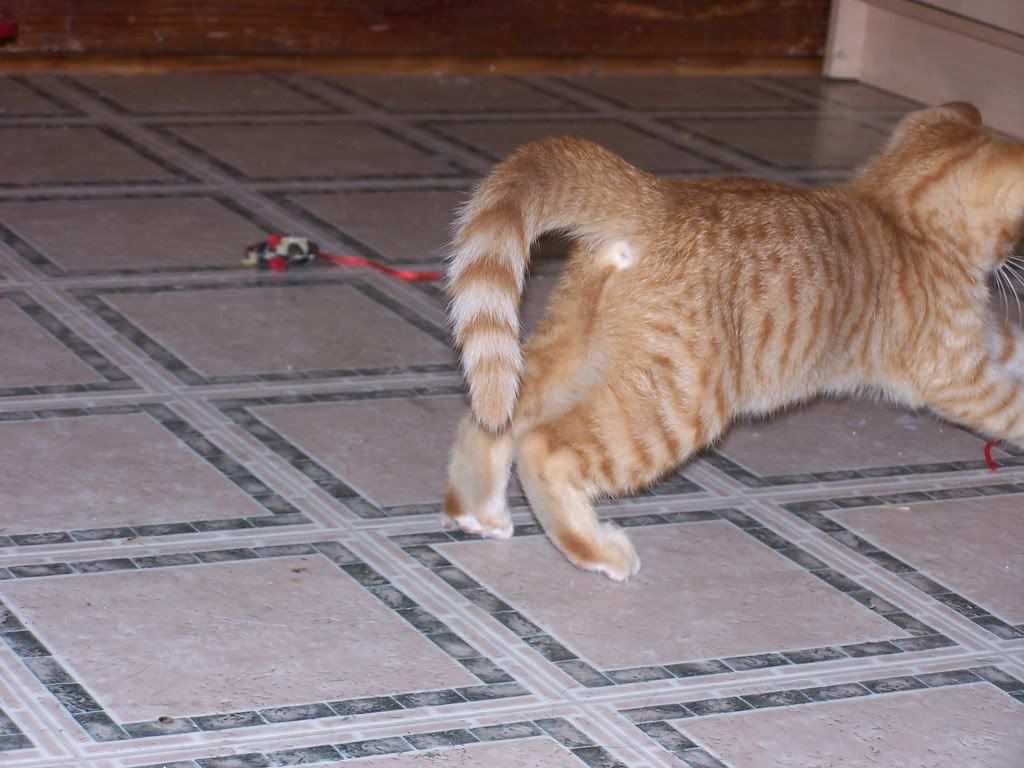
Boo Radley, in the mud room turned kitten sanctuary, upon his arrival at our house.

ONE SENSE AT A TIME
Undoubtedly, your cats know there's a newcomer in your home. There's probably been some high interest around the door that is hiding your new guy, and that's ok, because what we're going to do here is introduce your cats to each other one sense at a time.

One sense at a time is how zoos introduce big cats as well. Below is an excerpt from an article in the Chicago Tribune called "Young lion has big pawprints to fill at Lincoln Park Zoo".

"Sahar, who does not have a mane yet, is in quarantine and will be slowly and gradually introduced to Myra, a 15-year-old lion, Dewar said. The lions need to be able to smell each other, then see each other and eventually get close to each other, she said." (You can read the whole article here, if you're interested.)

The first sense we're going to focus on is hearing. This one is easy and requires almost no effort on your part but observation – your cats can hear each other through the door. All you have to do is listen to what they say to each other. If there is hissing, spitting, or similar, then keep that door closed and don't do anything more at this point. When the cats are consistently making friendly noises through the door (or just ignoring each other), proceed to the next sense.

Up next is smell. Their noses have already picked up that there's another cat in the house, and they've smelt each other's scent on you, now it's time to purposely spread their individual scents around the house. There are a few different ways to do this:

  1. Still while keeping them separate, rub each cat with a clean towel (or tee shirt, or blanket, or similar), then trade the towels out. Allow each cat to sniff and otherwise check out each other's towels. If they don't show any interest, put it in a spot were they can check it out on their own time.
  2. Give it a day or so, then do another trade out, this time with scratching posts. Allowing each cat to smell and use each other's posts will give them a plethora of information about their new roommate.
  3. Next, do a poop switch. Just scoop some out of new cat's litter box and put it in old cat's litter box, then vice versa.
  4. Finally, after you've gone through all these steps, do a full room switch out. Let your new cat wander around the house while your resident cat explores the room where new cat has been living.
Use your cat's reactions to determine the speed at which you go through these steps. Some cats hardly need any time at all, other cats can be frustratingly slow. Only move forward with the next step when both cats are consistently showing no signs of aggression. The harder you try to force it, the harder it's going to be!

Now it's time for sight. The goal here is to let the cats actually see each other for the first time without getting close enough to hurt each other. A screen or glass door works perfect for this, but if that doesn't work with the layout of your house, try and have a friend help you. Again, watch your cats reactions. If things are going positively, you may be able to let them interact, just be ready to swoop in if things start getting nasty. If there's hissing and ear flattening, or other signs of aggression, keep them separate and try another day.

When your cats are interacting for the first time, try to distract them with positivity. Get out some toys, pet and talk to them, bribe them with treats, whatever it takes for them to walk away from the experience thinking that it wasn't so bad.

Take it slow, and don't be afraid to take a step back if things don't seem to be going well. When it comes to the last two senses, touch and taste, allow your cats to decide on their own when they're ready to cuddle or help each other out with grooming.

Remember, to have a happy cat house you need to reduce competition. That means you have to have ample love and attention for each cat, separate food/water dishes, enough litter boxes (number of cats +1), and plenty of vertical space. If your cats feel like they have to compete for resources, it's going to take much longer for them to get along.

Tuesday, March 13, 2012

Added Some More Old Photos


I raided Jerod and I's Myspace accounts and found some great photos. They are predominantly puppy pictures of Scout (as in, all but one of them), but I think she's worth the look. Go check them out here: www.photobucket.com/jenyqueenofcats.

Scout with my nephew. She is exactly one day older than he is.

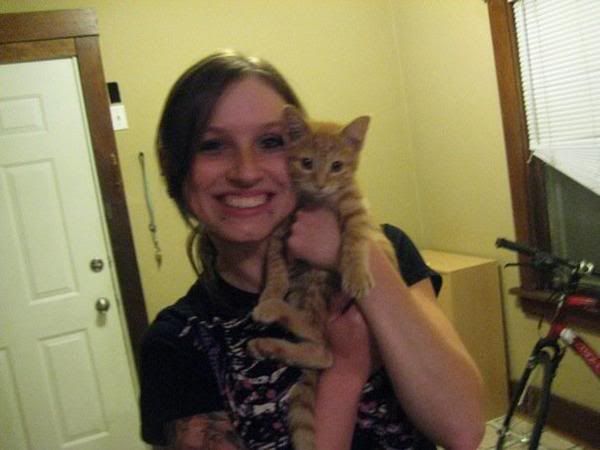
Boo and I, the day of his homecoming.


Thursday, March 8, 2012

Importance of Vertical Space

An architect and a landscaper will look at the same street corner and see completely different things, much in the same way that a retailer and their customer will look at a window display and get a different story. Even what constitutes as extra, open, or empty space changes with experience. My concept of space changed entirely after making the move from Nebraska to Chicago. If the very life you lead can cause you to view space in a different way, then it stands to reason that the space in your home looks differently through the eyes of your cat(s).

Cats need vertical space. It is especially important in a multi-cat household where hierarchy is a big deal. Generally speaking, your "top cat" is going to be in the highest spot of your home, where it is easy for them to survey their domain. It's far more involved than all that, and there are plenty of other ways cats display dominance, but elevation is a basic visual cue.


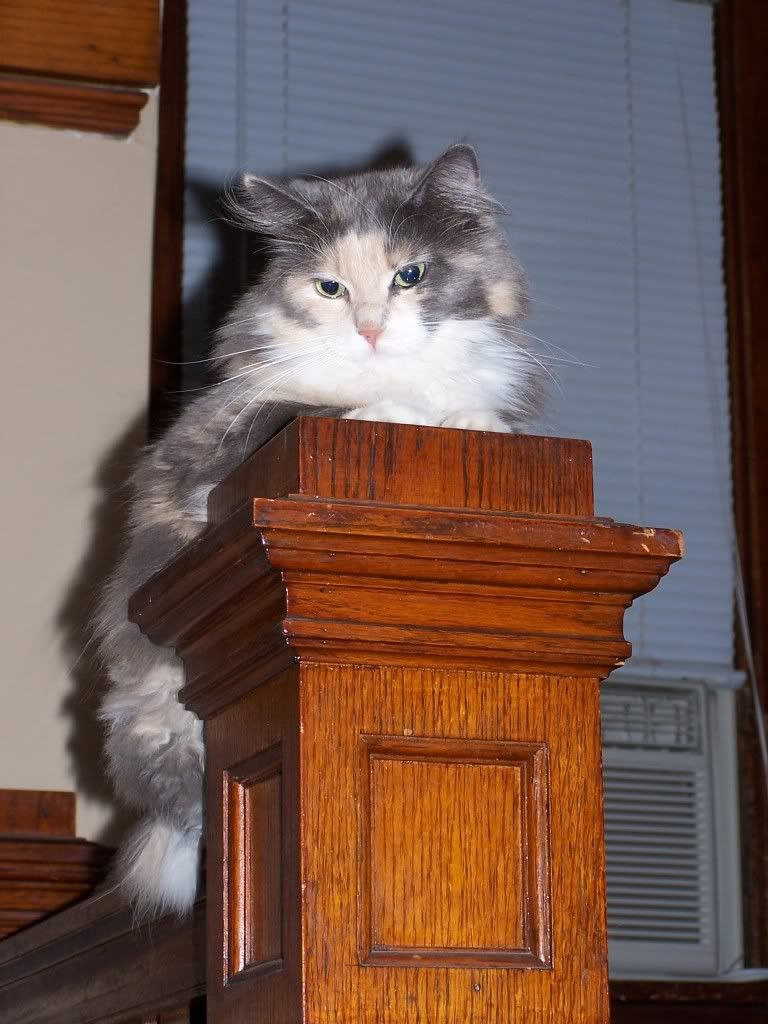
Mona on the staircase.
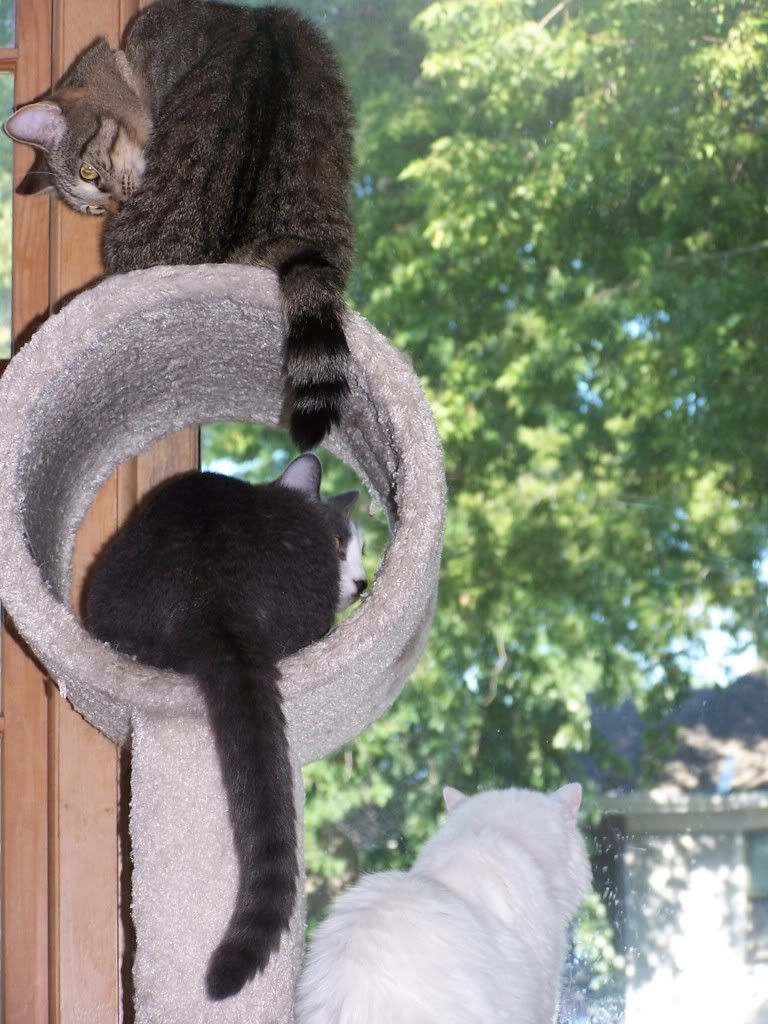
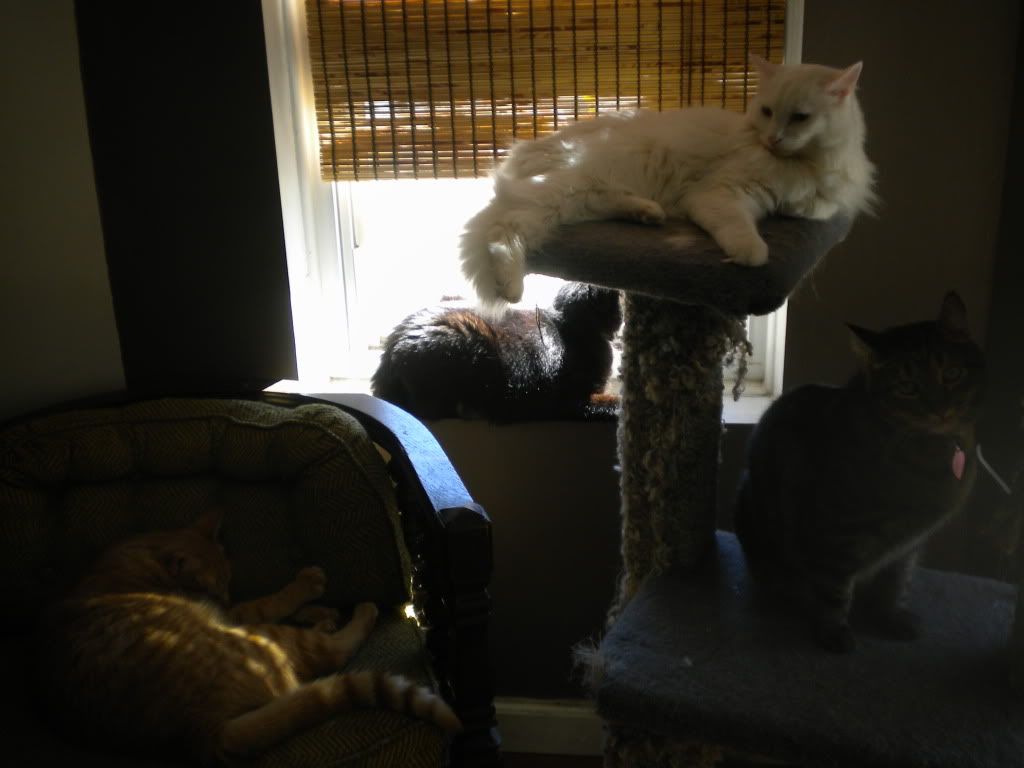
Some boys enjoying a multi-leveled view.


In a home without vertical space, it can be harder for cats to establish who is dominate. Because they are on the same physical level or close to it, the more dominate cat may feel that the less dominate is trying to usurp it's power, causing fights. The less dominate cat might not even want "the power", but without the ability to effectively communicate that, it's left with the standard two options, fight or flight. Fight, and you're left with battling cats who could seriously hurt each other, or flight, in which you have a rather aggressive top cat, and another cat who is scared, nervous, and hiding all the time. Neither situation is a great one to find yourself in.

Cats on every level!
Asses the vertical space in your home. When it comes to cats, that matters far more than the actual square footage. Cat trees are great, and they aid in healthy scratching, but they are not the only option. In my house the cats can frequently be found on the top of the fridge, the kitchen cupboards, on the bookcases and record shelves, or on the crate thing that holds our couch pillows and blankets, as well as spending time on their cat trees. Just make sure you have a few items in your home that are tall, stable, and that have room for a cat on the top of them.